
Cast iron cookware: a practical guide to choosing, cooking and care
Start with what you cook, then choose the shape and surface. This guide brings cookware selection, everyday care and first recipes together.
Choose cast iron cookware around the meals you actually make. A flat skillet works well for vegetables, potatoes and pan pizza. A covered pot is useful for bread and slow cooking. The next decision is the surface: seasoned iron needs drying and a thin oil film; enamel needs gentle cleaning and protection from knocks and sudden temperature changes.
Which shape belongs in your kitchen?
A wide cooking surface lets ingredients brown without crowding. A deep pot holds liquid and traps steam under a lid. Neither replaces the other in every recipe. For a small kitchen in Hungary, start with one shape you will use weekly rather than a large matching set.
| Your usual meals | A useful starting point | Measure before buying |
|---|---|---|
| Vegetables and smaller portions | Flat skillet around 25 cm | Flat base and hob zone |
| Pan pizza or larger batches | Skillet around 30 cm | Oven width including handles |
| Bread and braised dishes | Covered Dutch oven | Internal height and temperature limit |
| Wide, shallow oven dishes | Shallow casserole | Usable base area |
Compare the 25 cm skillet, 30 cm skillet and 5 l Double Dutch oven. Use our skillet buying guide to check size and handling.
Seasoned or enamelled?
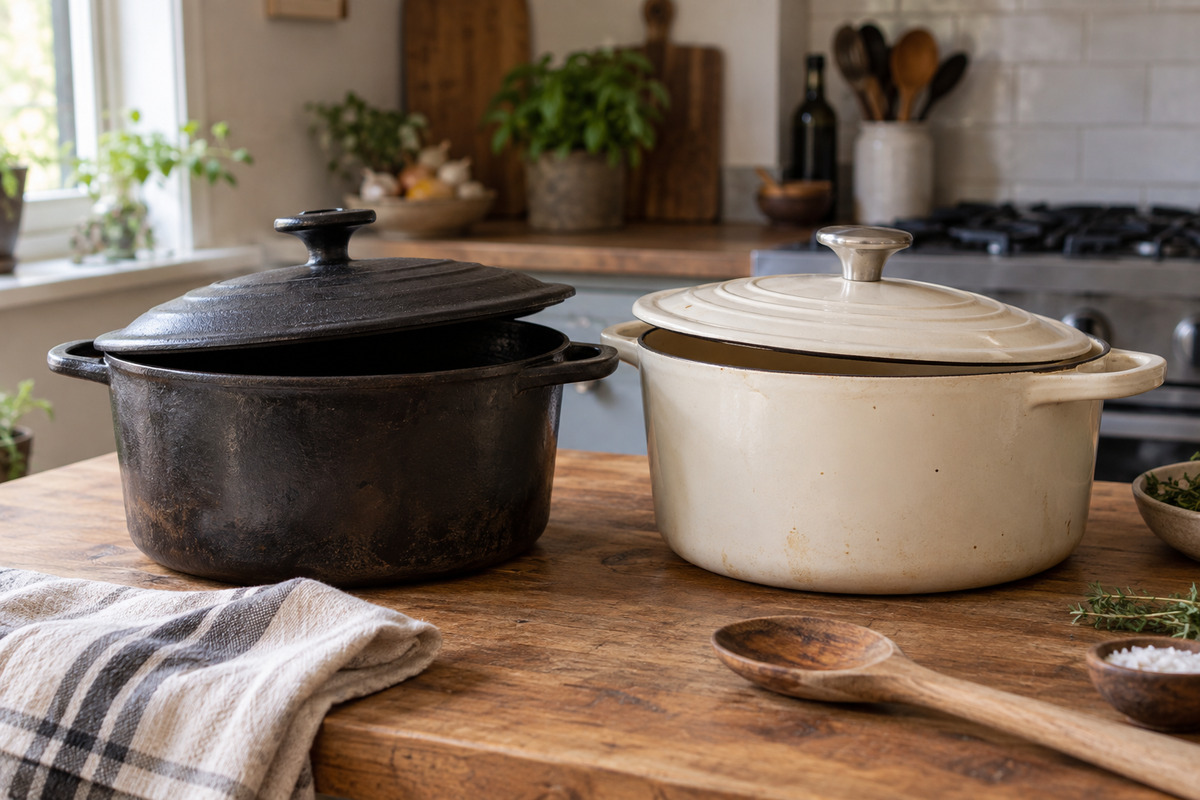
Seasoned cast iron has a protective layer of oil baked onto its surface. It is useful for browning and baking, but needs prompt drying after washing. Enamel is a glass-like coating: it does not need seasoning and is a practical choice for long cooking with tomato or wine. Black enamel can resemble seasoned iron, so identify the surface from the product description.
Read enamelled versus seasoned cast iron before choosing. Both are heavy and retain heat; both need care.
Heat control matters more than maximum heat
On a hob, heat gradually and match the flat base to the cooking zone. Start at low to medium power. An induction boost setting is not a shortcut to even heating. Add oil and food according to the cookware instructions; do not apply an empty-preheating method intended for seasoned iron to an enamelled pot.
Give food space and time to brown before turning. If the pan smokes or oil darkens quickly, reduce the heat. Carry hot cookware with dry protection and prepare a heatproof resting place before lifting it.
A simple cleaning routine
For seasoned iron, wash, dry thoroughly and wipe on a barely visible oil film. A small amount of ordinary washing-up liquid is compatible with sound seasoning. Avoid soaking and dishwashers. For enamel, let the pot cool, soften stuck food with warm water and use a non-abrasive sponge.
Our guides explain cleaning seasoned cast iron, cleaning enamel and restoring seasoning. If food sticks, diagnose heat and crowding before adding more oil layers: see why food sticks.
Choose a first recipe that teaches you the pan
Try potatoes or mushrooms in a skillet, then cast iron pan pizza. A covered pot opens the door to Dutch oven bread. Start with manageable quantities and change one variable at a time. The Double Dutch oven guide explains when a pan-shaped lid adds useful flexibility.
Buying cast iron in Hungary
Browse cast iron cookware and enamelled cookware for dimensions, weight and current availability. English-speaking customers can use our Hungary buying guide to prepare a clear product enquiry. Confirm collection or delivery options before ordering rather than relying on a general banner.
Can one pan do everything?
No single shape is best for every dish. A skillet gives space for browning; a pot gives depth and a lid. Choose the job first and keep this guide as the starting point for care and recipes.

