
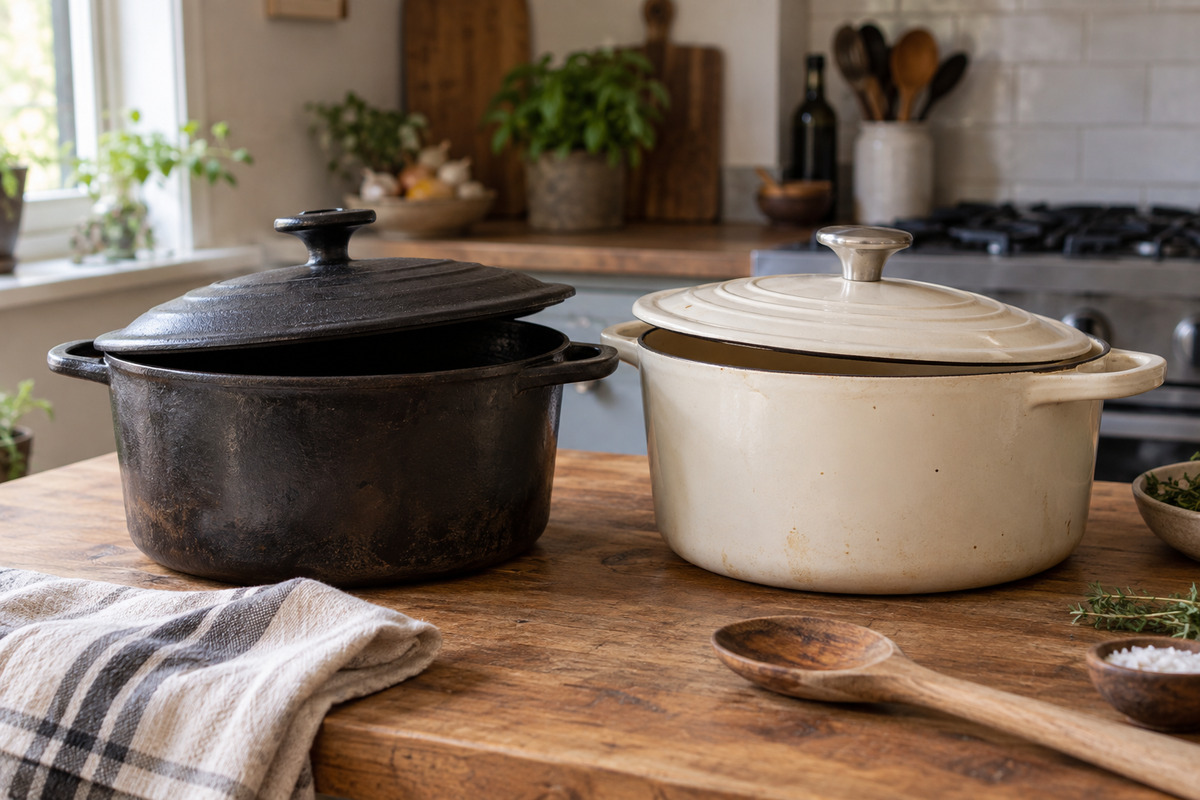
Enamelled or seasoned cast iron: which should you choose?
The material underneath is cast iron in both cases. The surface changes how you cook, clean and maintain it.
Choose enamel for gentle cleaning and longer acidic cooking; choose seasoned iron when you are happy to dry and lightly oil it after use. Neither surface removes the need for sensible heat control. The right choice depends on your meals and routine.
What is the difference?
Seasoned cast iron is protected by a thin layer of polymerised oil. It is not a permanent synthetic non-stick coating, and it develops with appropriate cooking and care. Enamel is a bonded glass-like coating. It separates food from the iron and does not need oil baked onto it.
Do not judge by colour alone. Some enamelled cookware has a black interior. Read the product specification before scrubbing or seasoning a dark surface.
Match the surface to your recipes
| Task | Practical choice | Reason |
|---|---|---|
| Long tomato or wine-based braise | Intact enamel | No seasoning layer to disturb |
| Potatoes, mushrooms and pan pizza | Seasoned skillet | Useful flat browning surface |
| Bread | Either, with a suitable method | Follow the specific pot's heating rules |
| Lowest maintenance after washing | Enamel | No seasoning routine, but gentle handling required |
For paprikás or a tomato-rich stew in your Hungarian kitchen, an enamelled pot is a straightforward option. For searing, surface area and heat control still matter more than the colour of the coating.
What changes during heating?
Both surfaces sit on a heavy iron body that stores heat. Heat gradually on a matching hob zone. Follow the manufacturer’s instructions for oil or liquid and avoid prolonged empty heating of enamel. Do not pour cold water into a hot pot.
A covered bread recipe must suit the cookware. If empty preheating is not permitted, use a method that starts with dough in an unheated pot. Check handles, knobs and any baking paper against the planned temperature.
Care routines compared
Seasoned iron: wash, dry fully and wipe with a very thin oil film. Restore seasoning when the surface needs it. Enamel: cool first, soak stuck food in warm water and clean with a soft sponge. Do not use seasoning instructions to repair damaged enamel.
Follow seasoned iron cleaning or enamel cleaning as appropriate. Chipped enamel on a food-contact surface needs assessment; an oil layer cannot mend it.
Compare like-for-like cookware
The seasoned 5 l Double Dutch oven and enamelled 5 l Double Dutch oven show how the same type of vessel can have different surfaces. Check usable dimensions, weight, compatibility and temperature limits on each listing.
Which should be my first piece?
If you mainly want sauces and covered cooking, start by comparing enamelled cookware. If you want a frying pan and will maintain its surface, browse cast iron skillets and pots. The main cast iron guide and size guide help narrow the decision without buying more than you need.

