
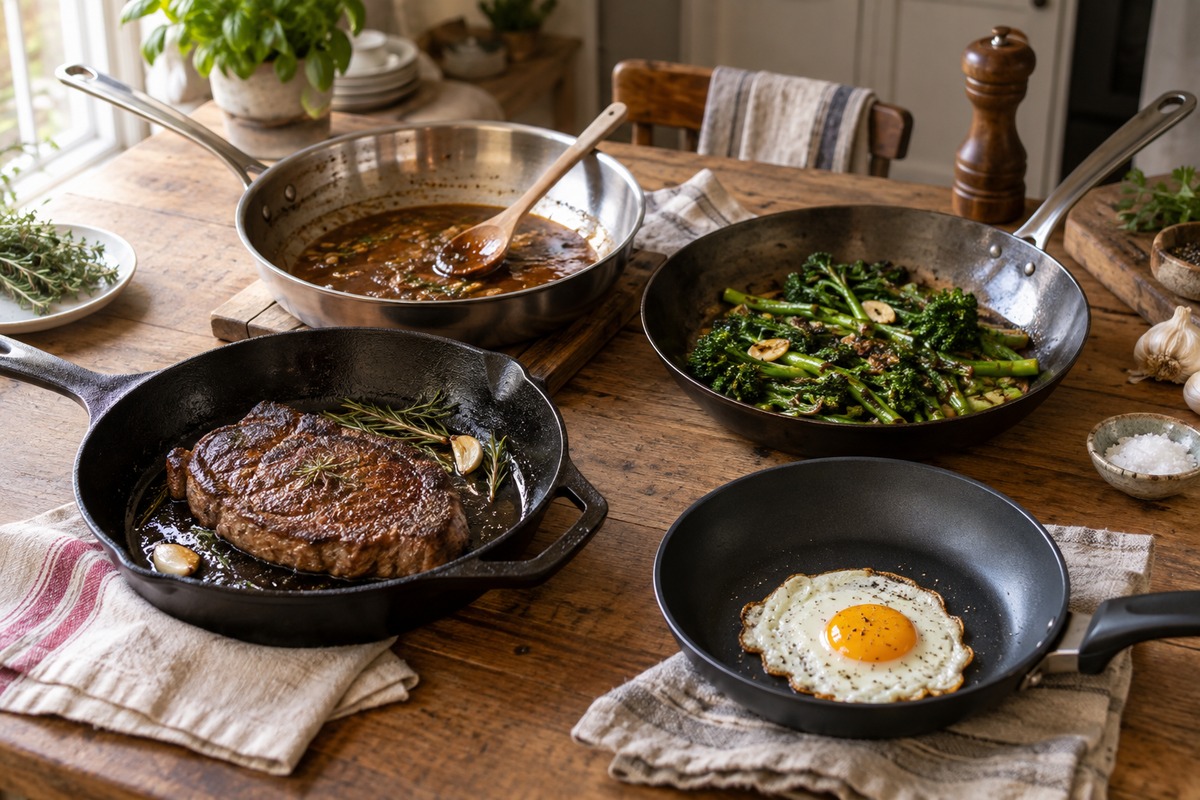
How to choose a cast iron skillet: size, surface and hob fit
The diameter on the box is only one measurement. Check the cooking base, handles, weight and the meals you want to make.
Choose the smallest skillet that comfortably cooks your usual batch. A bigger pan is useful only if your hob can heat it properly and you can safely lift it. Compare flat cooking area rather than assuming the rim diameter tells you everything.
25 cm or 30 cm?
A skillet around 25 cm is a manageable starting point for smaller batches of vegetables, potatoes or meat. A 30 cm pan provides more room for browning and pan pizza, but needs more oven space and may be harder to heat evenly on a small hob zone.
Compare the 25 cm cast iron frying pan and 30 cm frying pan. Check their listed weight and overall dimensions. A recipe's serving count is not a substitute for measuring the food and pan.
Check your hob before your basket
Measure the flat base and compare it with the appliance’s recommended pan sizes. Induction works through a compatible base, but a small heating zone under a large pan can leave the edges cooler. Heat gradually; high power does not correct a poor match.
On a glass hob, lift rather than drag heavy cookware and check that the base is clean. Follow both the hob and cookware instructions. For a rented kitchen, take measurements instead of guessing from how large the hob looks.
Measure the oven opening too
Include handles in the total width and check shelf depth. Leave room to grip the pan with dry protection. A pan that fits tightly while cold may be awkward to remove safely when hot and full.
For pan pizza, a flat base and usable diameter matter. For a dedicated larger pizza surface, compare the 35 cm cast iron pizza pan with your oven measurements. It is cast iron, not a steel baking plate.
Flat or ridged?
A flat pan makes full contact with potatoes, dough and mushrooms. A ridged pan leaves grill marks and spaces between the ridges, but is not automatically a better browning tool. Choose it for the texture and cooking pattern you actually want.
If your main aims are bread, a large braise or soup, you may need a pot rather than any skillet. The Double Dutch oven guide explains that alternative.
Choose the surface and routine together
Seasoned iron needs thorough drying and light oiling. Enamel avoids seasoning but needs protection from chips and thermal shock. Read the surface comparison before buying and use the cleaning guide after your first cook.
A five-minute buying checklist
- Write down three meals you will cook often.
- Measure hob zone and oven clearance.
- Check usable base, total width and weight.
- Choose enamelled or seasoned care deliberately.
- Check current availability and collection or delivery options.
Browse cast iron cookware or enamelled cookware, then return to the main guide for heat control and first recipes. For local ordering questions, our English buying guide for Hungary lists what to confirm.

