
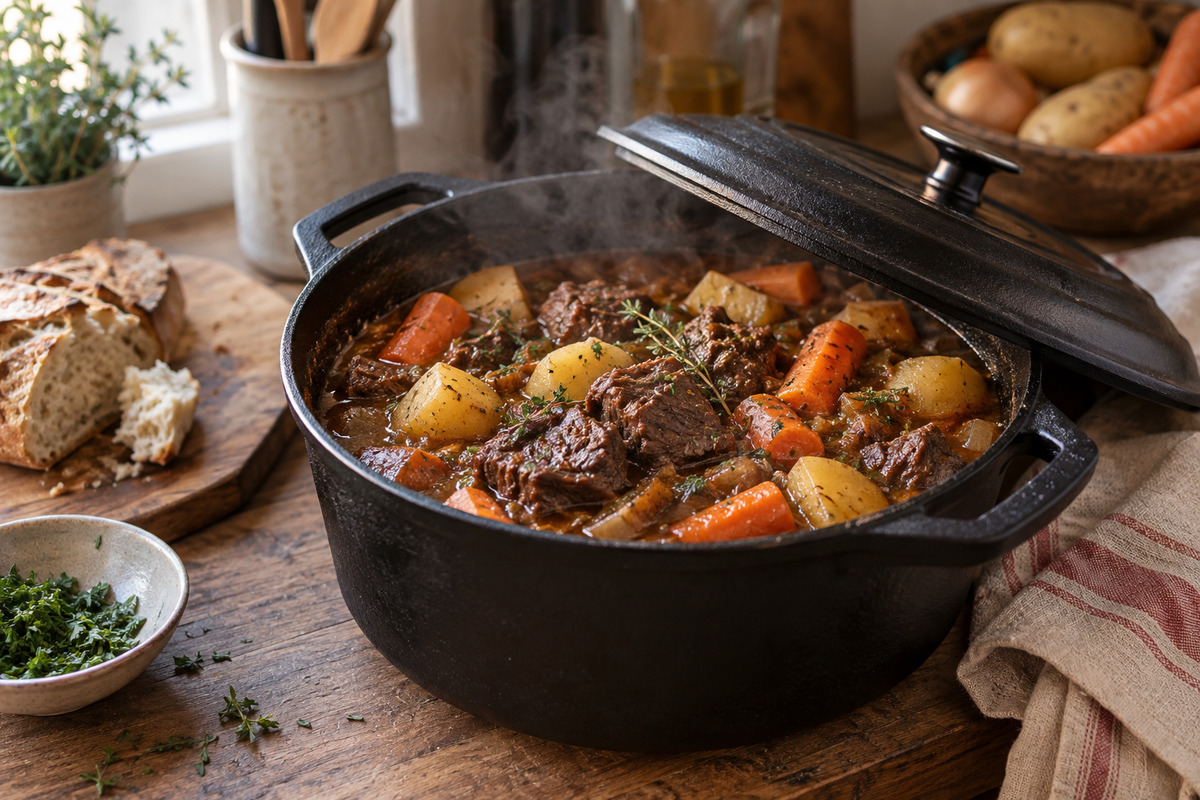
Double Dutch oven: how to use a pot with a skillet lid
A pan-shaped lid can make one piece of cookware more versatile. Check the specific construction and heating rules before using it separately.
A Double Dutch oven combines a deep pot with a lid designed for use as a separate pan. This is a feature of a suitable model, not permission to put any ordinary pot lid on a hob. Check the product specification before using the lid independently.
What can you cook?
The deep part suits covered cooking and bread. A compatible pan-shaped lid can cook potatoes, mushrooms or smaller batches of meat separately. If you often prepare both a main dish and a side, this flexibility may be useful in a compact kitchen.
A tall pot does not have the wide base of a shallow casserole. For browning, work in batches. For a large oven dish, measure the usable area rather than relying only on capacity in litres.
Seasoned and enamelled options
The seasoned 5 l Double Dutch oven needs full drying and light oil protection. The enamelled 5 l model needs gentle cleaning and protection from thermal shock instead of seasoning.
For long cooking with tomato or wine, intact enamel is a practical surface. Compare the two finishes before choosing. Check weight, height, overall width and permitted temperatures on each listing.
Heat and carry it deliberately
Start gradually on a matching hob zone. Follow the instructions for empty heating, fat and liquid. The pot, lid and handles remain hot well after cooking. Prepare dry protection and a heatproof surface before lifting.
Use both hands for a heavy filled pot. Set a pan-shaped lid down securely; its handles and base must suit the intended heat source. Browse heat-resistant gloves by their stated instructions and contact-time limits.
Bread depends on the start method
A covered pot traps some of the dough's moisture during the first stage of baking, helping the loaf expand before the crust finishes. Empty preheating is permitted only if the cookware instructions allow it.
Our Dutch oven bread recipe starts with an unheated pot in a preheated oven, providing an alternative when that method suits the pot. Check the temperature limit of the vessel, fittings and any baking paper.
Braising in a Hungarian kitchen
For a paprika-rich beef or vegetable braise, brown ingredients in manageable batches, then add liquid and cook gently under the lid. Use the surface appropriate to the recipe. Do not mistake a rolling boil for faster tenderising.
Prepare a place for the hot lid before opening, and keep your face away from escaping steam. Reduce liquid at the end only when the recipe needs it.
Is it worth buying if you already have pans?
Choose it if you will use both functions and can handle the weight. If you already have a suitable pot and skillet, it may add little. Our main guide helps choose by cooking task rather than collecting shapes.
Compare cast iron cookware and enamelled cookware. After use, follow seasoned iron care or enamel care, and dry the lid as thoroughly as the pot.

