
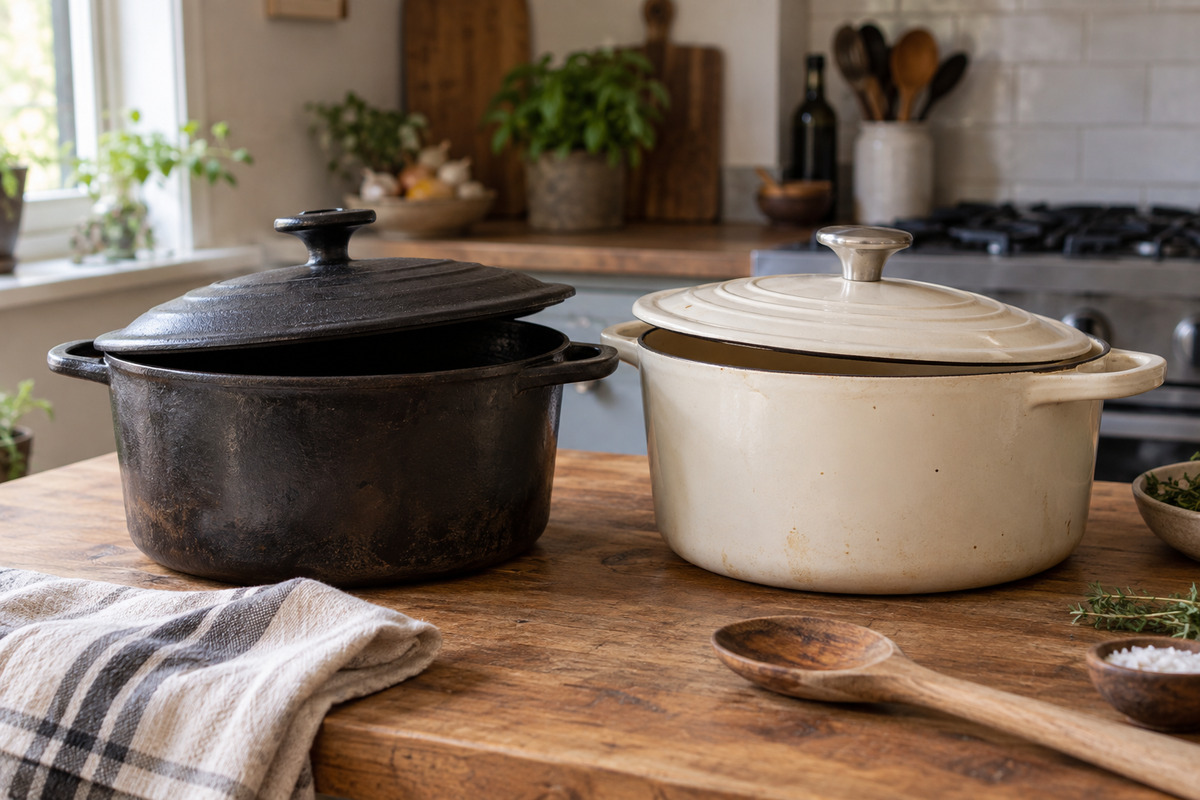
How to clean enamelled cast iron without damaging the surface
Enamel does not need seasoning. Protect the coating with patient cooling, warm water and a soft sponge.
Let enamelled cast iron cool, soften stuck food with warm water and clean with a non-abrasive sponge. The coating needs gentle handling. Do not apply the scrubbing or oil-baking methods used to restore bare iron.
Identify the coating first
Enamel can be light, colourful or black. A dark interior may look like seasoned cast iron, but it does not need seasoning. If you are unsure, check the product listing and instructions before using an abrasive cleaner.
Our surface comparison explains the difference. This guide covers intact enamel; cracks and chips require a different decision.
Cool before adding water
Put the hot pot on a dry, heatproof surface and let it cool. Sudden temperature changes can damage the coating. Never move a hot pot straight under a cold tap or place it on a wet, cold surface.
Wait until it is safe to handle, then use warm water and ordinary washing-up liquid. Clean the rim, lid and handles as well as the cooking surface.
Loosen stuck food gently
- Cover the residue with warm water.
- Allow it to soften rather than attacking it with a metal scraper.
- Use a soft sponge or an enamel-safe brush.
- Rinse and inspect before repeating.
- Dry the pot and lid thoroughly.
For stubborn deposits, use only a cleaner and method approved for that enamel. Check the manufacturer's instructions before using baking soda or any specialist product. Mixing cleaners is unnecessary.
Stains are not always damage
A mark can be food staining, residue or a metal transfer mark. A rough patch, crack or chip is a different issue. Do not grind the surface until every colour variation disappears.
If a food-contact surface has chipped or you see a crack, stop using it for cooking and seek the manufacturer's advice. Oil cannot repair enamel. An exterior mark also deserves assessment if you are unsure of its depth.
Prevent the next difficult clean
Use moderate heat and avoid prolonged empty heating. Add fat or liquid according to the cookware instructions. Do not crowd ingredients and let browned food release before turning. A coating does not make every cooking technique non-stick.
For tomato-rich sauces or paprikás, enamel is practical, but food can still burn if liquid evaporates unnoticed. Stir as the recipe requires and keep a gentle simmer rather than a fierce boil.
Choosing and storing cookware
The enamelled 5 l Double Dutch oven suits covered cooking and has a pan-shaped lid; the 30 cm shallow enamelled casserole offers a wider cooking format. Compare dimensions and heating limits for your recipes.
Store clean, dry pieces with a dry protector between stacked surfaces. Explore enamelled cast iron cookware, or return to the main guide. For bread, use a pot-compatible method rather than assuming every enamelled vessel can be preheated empty.

