
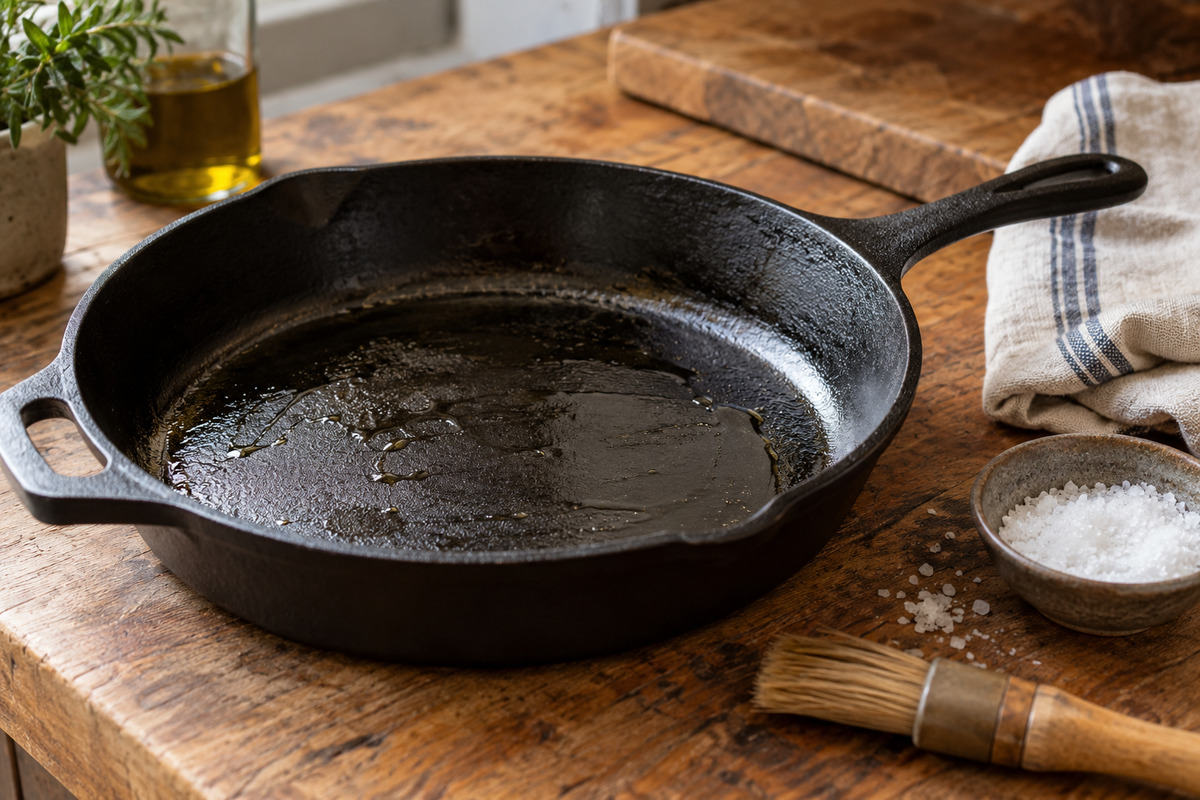
How to clean cast iron after cooking: a simple daily routine
A short routine after each meal is easier than repairing a neglected pan. These steps apply to seasoned iron, not enamelled cookware.
Wash seasoned cast iron, dry it completely and finish with a very thin oil film if needed. You can use a little ordinary washing-up liquid. Long soaking, dishwashers and damp storage cause more problems than a sensible hand wash.
Start with safe cooling
Remove food and let the pan cool enough to handle safely. Do not pour cold water into a very hot pan. Keep handles in mind: heavy iron stays hot after the hob is switched off. Dry protection and a stable resting place matter as much as the cleaning tool.
Wash off food, not just visible grease
Use warm water, a non-abrasive brush or sponge and a little washing-up liquid when needed. Clean the underside and handle too. A sound seasoning layer is bonded to the surface; a normal hand wash does not automatically remove it.
For stuck pieces, use a suitable pan scraper. If necessary, briefly simmer a little water to loosen residue, following the cookware instructions. Avoid leaving the pan submerged overnight or using heavy abrasion as your daily routine.
Dry immediately
Towel-dry every part, then use gentle warmth if the instructions permit it to remove residual moisture. Stay with the pan and do not leave an empty vessel heating unattended. The underside, handle junctions and lid rim also need to be dry.
Moisture left beneath an oil film can still cause rust. Oiling is not a substitute for drying.
Apply less oil than you think
When the surface needs protection, wipe on a few drops of oil and then wipe again until it looks almost dry. It should not feel tacky. Thick layers attract residue and can make the next cook smoke.
For a bare or damaged seasoning layer, read how to restore seasoning. Routine light oiling after washing is different from baking a new protective layer in an oven.
What if you see rust or black residue?
A small rusty area on seasoned iron needs suitable cleaning, full drying and renewed protection. Extensive corrosion or uncertainty about the surface calls for manufacturer advice. Never treat chipped enamel as rusty uncoated iron.
Loose black flakes can be burnt food or damaged seasoning. Clean thoroughly before adding oil. If meals stick but the surface is intact, check heat, crowding and turning time first.
Store it ready for the next meal
Store fully dry cookware in a dry place. If stacking pans, use a dry protector to prevent scratching and trapping moisture. Leave a cleaned lid slightly offset where practical to allow airflow.
Can I use this routine for a black enamel interior?
No. Black does not identify the coating. Check enamelled versus seasoned iron and use the enamel cleaning guide for coated cookware. Return to the cast iron guide for cooking advice, or compare skillets and pots by surface before your next purchase.

