
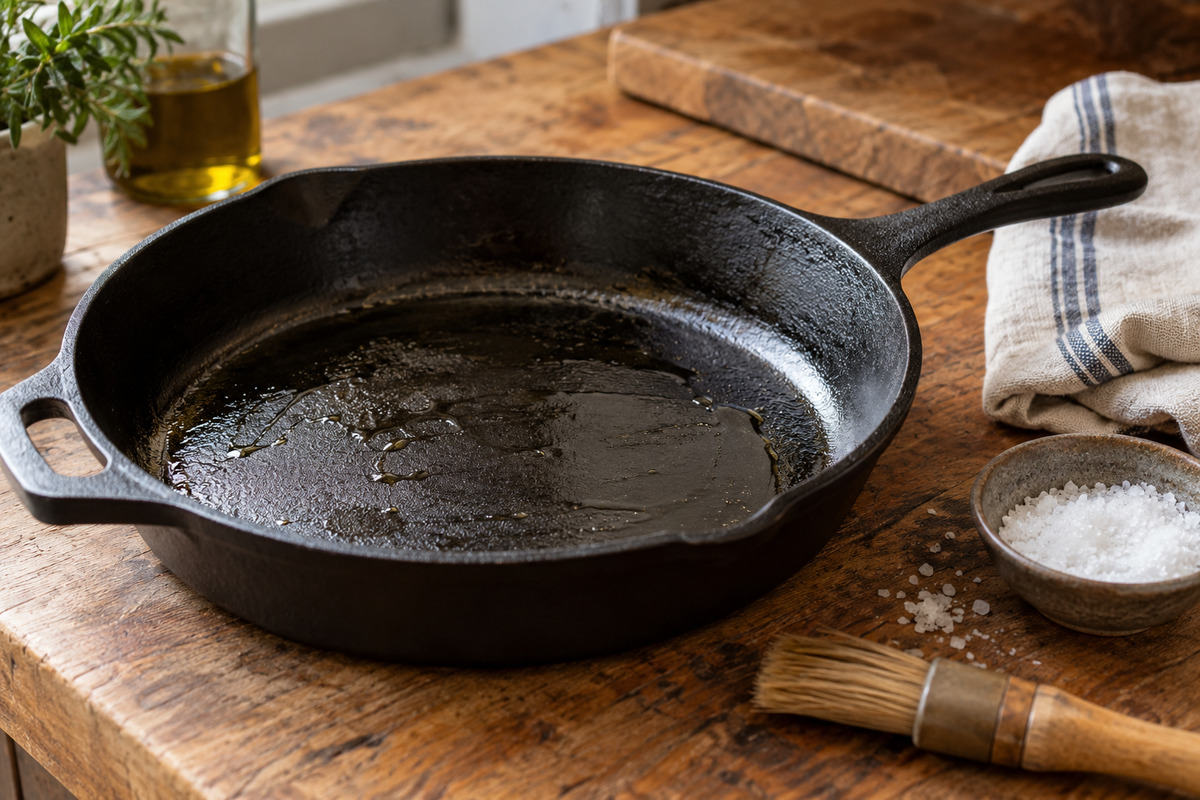
How to season cast iron: first use and restoring the surface
Good seasoning starts with a clean, dry surface and much less oil than you might expect. First identify whether the pan is enamelled.
Season only uncoated cast iron that is intended to have an oil-baked protective layer. Enamel does not need seasoning, even when it is black. Check the product instructions before treating any unfamiliar pan.
What seasoning does
Heating a very thin film of suitable cooking oil forms a protective layer bonded to the surface. This helps protect against rust and supports easier food release. It does not make a pan immune to poor heat control, crowding or washing mistakes.
A pan supplied pre-seasoned may need only the first-use wash and drying recommended by its manufacturer. You do not need to strip a sound surface just because the pan is new.
When is a new layer useful?
Consider restoring seasoning after removing rust from seasoned iron, or when the protective layer has become patchy and bare iron is exposed. First remove food residue. A sticky layer is often excess oil, not a reason to add even more.
For ordinary food sticking, read the cooking diagnosis before deciding the surface needs repair. For enamel, use gentle cleaning instead.
A controlled oven method
- Wash the seasoned pan and remove residues. Dry it completely, including the handle and underside.
- Check that the complete cookware is oven-safe at the seasoning temperature, including any attached parts.
- Apply a small amount of a suitable refined cooking oil, such as sunflower or rapeseed oil, to the uncoated iron.
- Wipe it off again until the surface looks almost dry. Visible puddles become sticky or uneven.
- For cookware permitting this method, bake upside down at approximately 230°C for about one hour, protecting the lower shelf from drips. Follow the specific manufacturer's temperature guidance.
- Switch off and let the pan cool safely. Ventilate the kitchen and keep oil well away from flames.
One thin, well-baked coat is more useful than several thick ones. Do not use this method on enamel, wooden parts or cookware with incompatible fittings.
What went wrong?
| Result | Likely cause | Next step |
|---|---|---|
| Sticky finish | Too much oil or incomplete baking | Clean excess residue; use a thinner film |
| Rust after storage | Moisture left on iron | Remove rust appropriately and restore protection |
| Food still sticks | Heat, crowding or early turning | Adjust cooking technique |
Keep the everyday routine simple
After cooking, wash and dry the pan, then wipe on a barely visible film of oil if needed. Store dry. Do not leave it soaking or put it in a dishwasher.
Can I use olive oil?
Oil choice and heating behaviour vary. A refined neutral oil is an accessible starting point for seasoning; use recipe-appropriate oils for cooking. The key is a very thin film and compliance with the cookware instructions, not the most expensive oil.
Review enamel versus seasoned iron and the main care guide. If you are choosing a first pan, compare the cookware range for surface and dimensions before treating it.

