
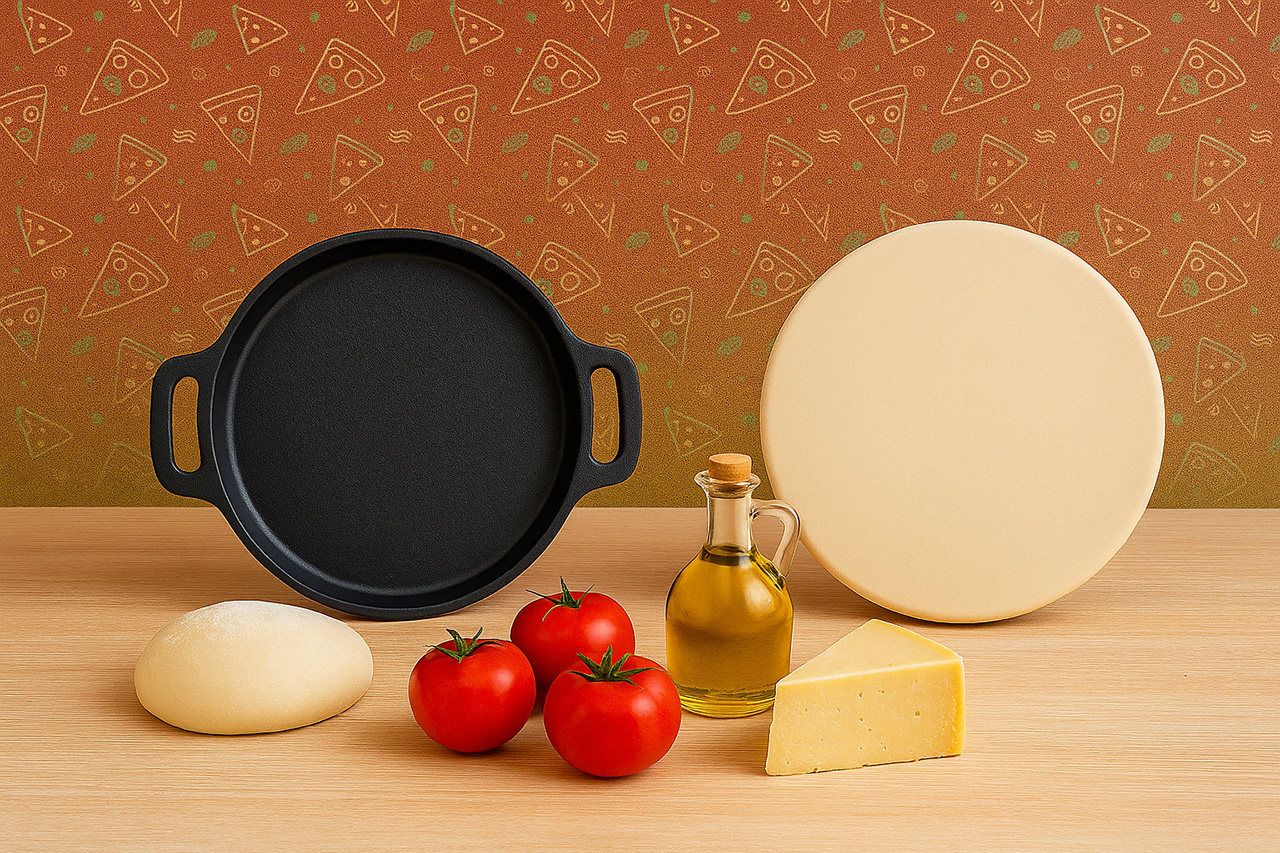
Pizza steel, stone or cast iron: choosing a baking surface
The material matters more than the phrase pizza plate. Match the surface to your oven, preferred pizza and handling space.
Choose a baking surface by actual material, dimensions and permitted use. Steel, stone and cast iron can all support pizza baking, but they heat and transfer energy differently. None compensates for wet toppings or dough that is not ready.
Steel: strong heat transfer
A steel plate can deliver heat quickly to the dough base. Thickness, weight and preheating matter, and a strong bottom heat may need balancing with your oven's upper heat. Check the manufacturer's guidance for oven position and temperature.
Uncoated steel needs suitable cleaning, complete drying and rust protection. Specially coated products may require a different routine. Do not apply generic seasoning instructions to an unidentified surface.
Stone: check thermal-shock rules
A pizza stone stores heat and supports direct baking once properly preheated. Ceramic, cordierite and other products vary. Follow the specific instructions about heating from cold, washing and maximum temperature.
Keep it away from sudden changes such as cold water on a hot stone. Do not soak a porous stone or add oil unless the maker explicitly permits it. A crack is not repaired by seasoning.
Cast iron: distinguish flat plate and skillet
Cast iron stores substantial heat and can be used as a dedicated pizza pan or a deeper skillet, depending on the design. Its weight and handles affect oven fit and safe transfer. Enamelled and seasoned versions have different care routines.
The Milestone66 35 cm pizza pan is cast iron, not steel. Compare its stated dimensions and use instructions with your oven. A 30 cm skillet offers a deeper pan format for skillet pizza.
Which suits your method?
| Your method | What to prioritise |
|---|---|
| Round pizza launched onto a surface | Clear working width, preheating and peel access |
| Thicker skillet pizza | Pan depth, oiling and final proof |
| Tray pizza | Tray base area and staged baking |
| Small oven | Total width including handles and safe removal |
Read home-oven pizza or tray pizza before buying. Match equipment to the chosen method.
Temperature checks have limitations
An infrared thermometer measures surface temperature, not internal food temperature. Shiny steel can give misleading readings because of emissivity and reflected heat. Follow the thermometer's guidance and do not interpret one number as proof that the entire plate is evenly heated.
Buy for a task, then maintain it
Measure your oven before ordering, check the product's temperature limit and decide where a hot surface will rest. Dry protection and a clear workspace are essential for heavy cookware.
Use seasoned cast iron care or enamel care for those surfaces. Check separate instructions for steel and stone. Explore pizza equipment, read peel handling and use troubleshooting when the result points to a method adjustment. The main pizza guide connects the options.

