
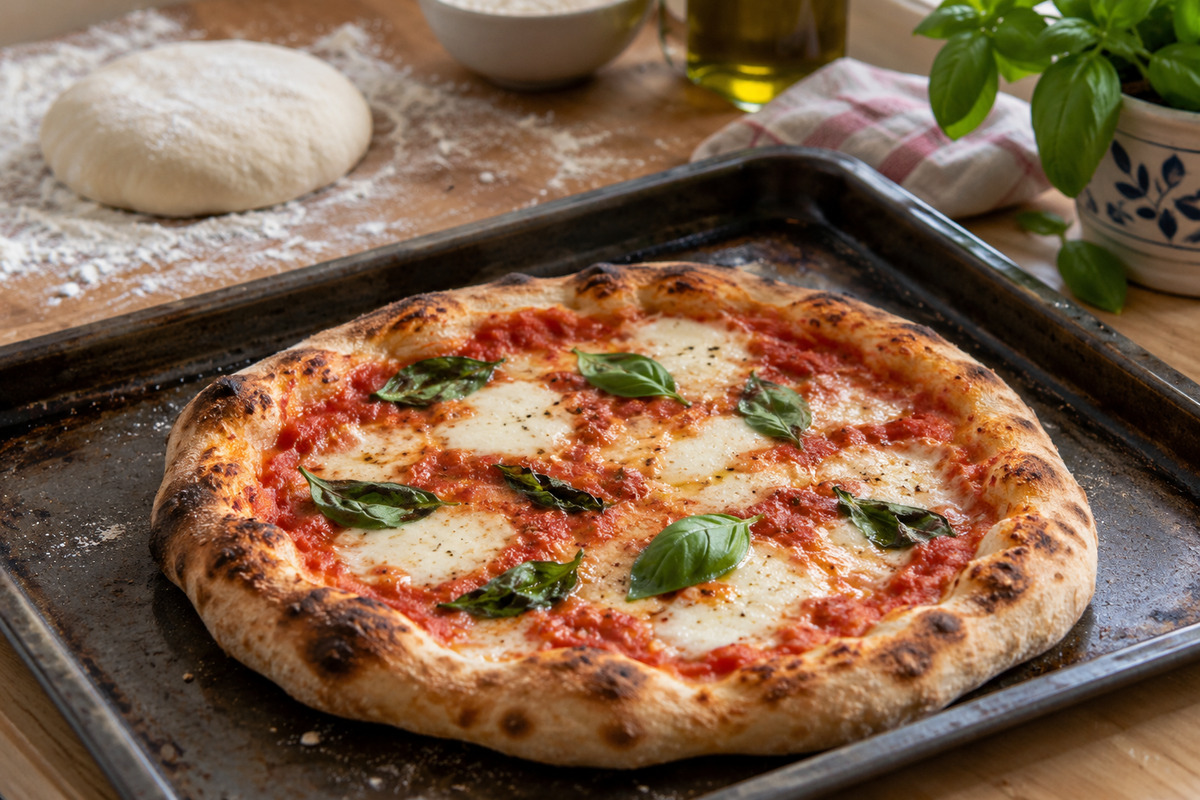
Neapolitan-style pizza in a home oven: realistic methods
A home oven can make an excellent raised-rim pizza, but its longer bake changes the result. Match the method to the heat you actually have.
A domestic oven around 250°C cannot reproduce the same bake as a much hotter dedicated Neapolitan pizza oven. Aim for a balanced Neapolitan-inspired pizza with a tender rim and baked base, rather than judging success only by leopard spots.
What your oven changes
Lower temperature means more time in the oven. The rim can dry before the base browns if the surface is not ready or the toppings are too wet. A suitable stone or steel helps transfer heat, but does not turn the whole appliance into a dedicated pizza oven.
Start with the basic dough or overnight dough. They offer manageable hydration while you learn your oven.
Preserve the rim during shaping
Use a relaxed dough ball. Press the centre outward with fingertips, leaving a border less compressed. Lift and turn gently rather than rolling the whole disc flat. Keep the centre even enough to support toppings.
If the dough springs back, rest it covered for 10–15 minutes. Pulling harder can tear the centre and squash the edge. If the dough spreads and tears with little resistance, assess fermentation and flour instead.
Preheat the permitted baking surface
Check the surface's heating instructions and maximum temperature. A heavy plate needs time to heat throughout, not only an oven-ready light. Choose a shelf with enough room above the rim and assess your oven's upper heat.
Read steel, stone and cast iron. The 35 cm Milestone66 pizza pan is cast iron; it must not be described as a steel plate. An infrared thermometer reads surfaces, with limitations on shiny metal and emissivity.
Top one pizza at a time
For a roughly 28–30 cm pizza, begin with about 60–80 g thick tomato sauce and 70–90 g well-drained mozzarella. Adjust to the dough and your oven rather than filling every gap. Tear fresh basil over the finished pizza if it would scorch during a longer bake.
Read sauce and cheese preparation. Assemble promptly on the peel and check that the dough moves before approaching the hot oven.
Bake and observe
At about 250°C on a suitable preheated surface, a thin round pizza may need roughly 6–10 minutes, sometimes longer. Watch the base and rim. Rotate if the oven colours one side more quickly and it is safe to do so.
A grill-assisted finish can help some ovens, but only with grill-safe cookware and close supervision. Never assume all stones, plates or paper are safe under direct radiant heat.
Improve the next pizza
A pale base suggests insufficient surface heat, excess moisture or an unsuitable position. A hard rim may mean too long a bake or tight dough. Use the diagnosis guide and change one variable.
For simpler shaping and transfer, try skillet pizza or tray pizza. Browse pizza tools after reading peel technique, and keep the main guide as your route through the recipes.

