
Pizza sauce and mozzarella: flavour without a watery centre
A good topping supports the dough instead of soaking it. Start with thick tomatoes, the right cheese and measured quantities.
For a quick pizza sauce, crush 400 g canned peeled tomatoes and add about 3 g salt as a starting point. Taste and adjust to the tomatoes. If there is excessive watery juice, set some aside before crushing. The sauce should spread thinly without flooding the dough.
A simple sauce needs few ingredients
Use tomatoes you enjoy, a restrained amount of salt and optional basil. For a fresh tomato flavour, leave the sauce uncooked. If your tomatoes are very watery, drain or reduce them gently and cool completely before topping.
Do not add sugar automatically. Taste first. Dried oregano can suit the style you want, but a large quantity may dominate the pizza. The dough and bake should still have room to contribute flavour.
How much belongs on one pizza?
For a thin 28–30 cm pizza, begin with approximately 60–80 g thick sauce, spread in a thin layer and leaving the rim clear. Treat that as a starting point: dough thickness, tomato consistency and oven temperature affect the result.
For tray pizza, scale by usable area and use staged topping where helpful. For skillet pizza, keep the centre light enough to bake through.
Fresh or low-moisture mozzarella?
| Cheese | Useful preparation | Watch for |
|---|---|---|
| Fresh mozzarella in liquid | Cut, drain in the fridge and blot | Water released during baking |
| Lower-moisture mozzarella | Cut or grate according to product | Colouring during a longer bake |
| Other melting cheeses | Use for the flavour and style intended | Salt, fat release and browning |
Keep cheese refrigerated while draining and follow the packaging's storage guidance. Draining is not a reason to leave dairy on a warm worktop for hours.
Prepare toppings before stretching
Begin with around 70–90 g cheese for a thin pizza, then adjust. Mushrooms, courgettes and tomatoes bring extra moisture. Prepare them according to the recipe and pre-cook anything that needs more cooking than the pizza will receive.
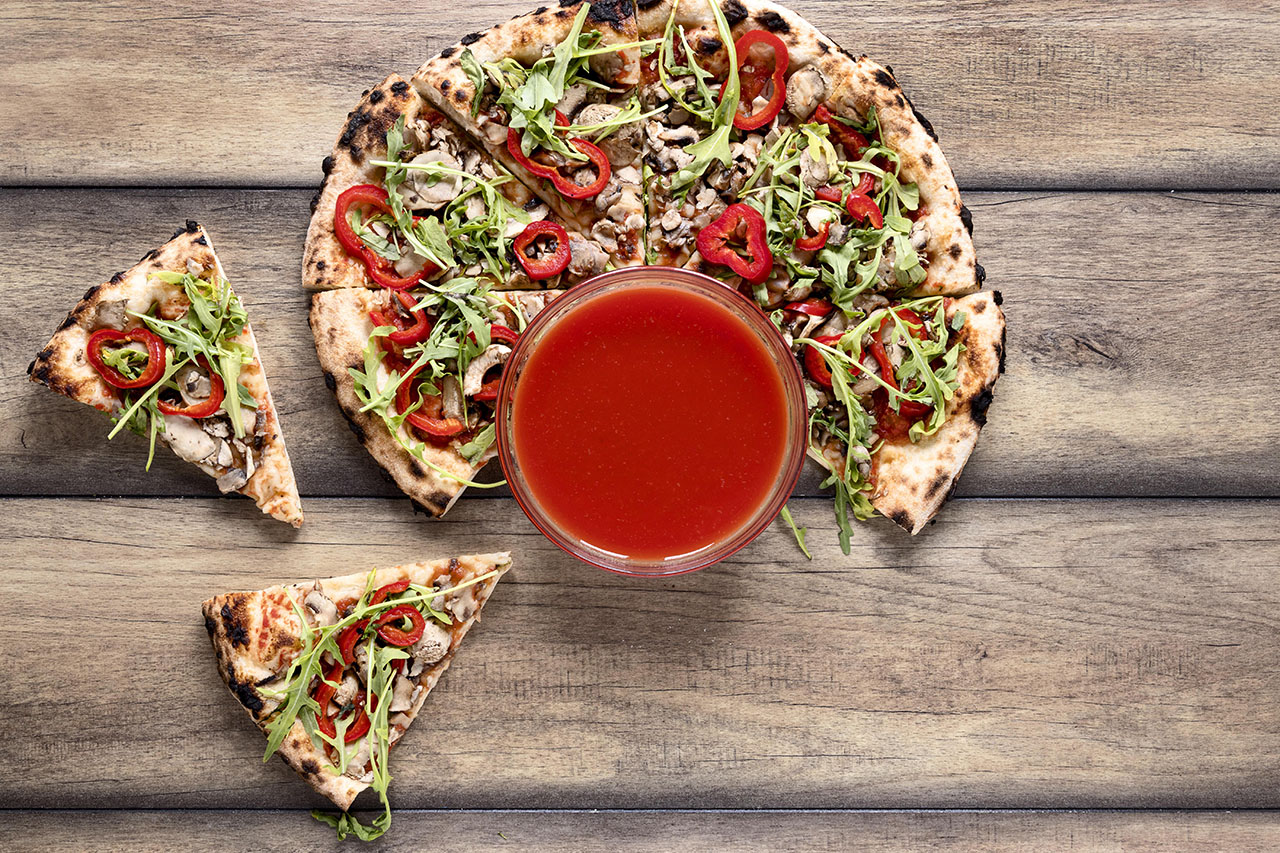
For a local variation, paprika peppers and red onion can work well in modest quantities. Strongly flavoured cured meat also needs restraint. Add delicate rocket or fresh basil after baking if they would scorch.
Why assembly time matters
Wet sauce sitting on dough makes transfer harder. Set out ingredients first, stretch one pizza, top it and bake promptly. Check movement on the peel away from the hot oven: see the peel guide.
For a home-oven Neapolitan-inspired pizza, the longer bake makes moisture and cheese choice particularly important.
Fix a watery middle systematically
Change one thing: drain cheese more thoroughly, use thicker sauce, reduce topping or improve base heat. Cheese melting is not proof that the dough is cooked. Read troubleshooting before changing fermentation.
A small oil jug helps add a controlled finish; too much oil can also weigh the topping down. Browse pizza accessories by task and return to the main pizza guide for dough and oven choices.

