
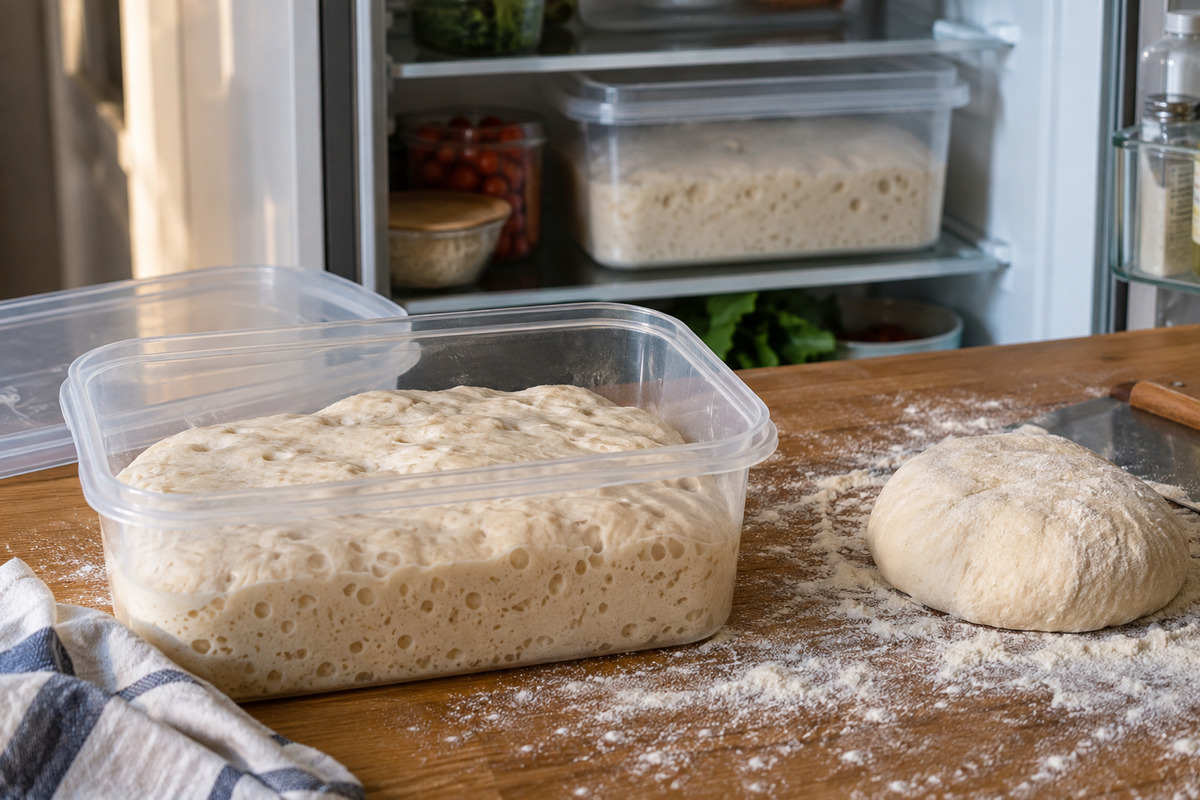
Cold-fermented pizza dough: a practical overnight schedule
Refrigeration helps organise the work, but it does not stop fermentation. Plan both the cold stage and the time needed before stretching.
For an overnight starting recipe, use 500 g flour, 325 g water, 12 g salt and 1 g instant yeast. This makes approximately three 279 g dough balls. Use flour suited to the schedule and a refrigerator around 4°C; the dough cools gradually, not instantly.
Choose a manageable first schedule
Begin with about 18–24 hours in the refrigerator rather than aiming immediately for several days. Fridge temperature, container size and dough temperature affect the result. A colder kitchen is not equivalent to a controlled refrigerator.
Read the flour guide before choosing a flour for a long rise. The same-day basic dough uses a different yeast quantity.
Evening: mix and develop the dough
- Mix ingredients until fully combined.
- Rest covered for about 20 minutes, then knead or fold until cohesive.
- Give one or two further folds at short intervals if the dough needs strength.
- After roughly 30–60 minutes of initial development, refrigerate in a covered container with expansion room.
These are handling steps, not a requirement to reach a full room-temperature rise first. In a warm kitchen, avoid leaving it out for hours before chilling.
Next day: divide and relax
Remove the dough, divide into three equal pieces and form smooth balls without tearing. Cover them separately or with enough space between them. Allow roughly 2–4 hours at around 22°C to relax and become puffier before stretching.
Check the actual dough. Cold, tight balls may need longer; very warm conditions may shorten the window. A fridge-cold ball that springs back is not ready just because your planned dinner time has arrived.
Recognise the useful window
Ready dough is aerated and extensible, with a surface that can hold some tension. Underdeveloped dough can feel tight and dense. Dough that has gone too far may spread, collapse or tear easily when lifted.
If timing repeatedly fails, change yeast or temperature within a planned recipe. Do not add more flour to every weak batch and assume the cause is fixed. Use the troubleshooting guide.
Stretch, top and bake
Prepare sauce and cheese before shaping. Use a light dusting on the work surface and avoid a long wait on the peel. Bake on a compatible preheated surface, monitoring the base as well as the topping.
Read peel technique, moisture control and baking surfaces. A rested dough makes transfer easier, but a heavily topped pizza can still stick.
Improve with notes
Record fridge temperature, total cold time, flour, yeast and time after removal. Change one variable for the next batch. Once this method is consistent, biga or poolish provides another option; it is not a mandatory upgrade.
Can I leave it in the fridge longer?
Possibly, but not without considering flour, yeast, temperature and food storage. This recipe is a starting overnight schedule, not a promise for every multi-day fermentation. Return to the main guide and compare tools only after identifying what your method needs.

